Sustaining Relationships

In Leo Tolstoy’s retelling of the Russian proverb “The Three Questions,” the final question is the most critical:

What is the most important thing to do?
Of all the things I’ve done in my life to sustain relationships with colleagues, students, and schools, I think the routine of handwritten notes sent to others may be the most important. This may strike you as absurd, or make you wonder if I’ve ever done anything that matters in my professional life. But time and again, when it comes to innovation and collaboration that endures, nothing forges more of a connection or an impression than taking the time to write a short, kind note on stationary at a time when it isn’t expected or required.

Brenda Power
Choice Literacy
Editor

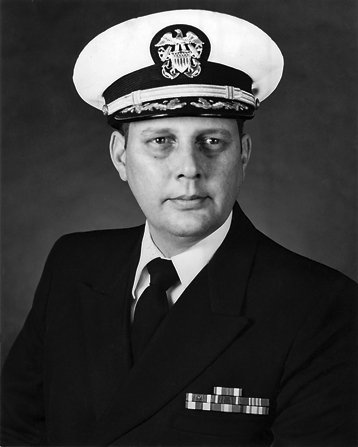
Wisdom from Captain Howie Ehret – "On Getting Things Done"

Making things happen in the Navy…
“I’ll send you a message, you send me a message, then we’ll get a bunch of guys together and make things happen.”
From the best-selling paperback – “The Wit and Witticism of Chairman How” – Captain Howie Ehret, Old School Publishing Company
Back in the day, it wasn’t any more complicated than that.  Have a great idea?  Let’s make it happen – ‘Chairman How’ style.

On "Creating Time"

Last summer witnessed the release of the Cryptologic Community Foundational Principles. The document’s self-described purpose is to “unify the efforts of the Cryptologic Community,” and it outlines the community’s beliefs, mission, and values. The document boldly states: “Time is our most precious resource. We will make time for what is most important and we will create time for Operational Commanders.” The community’s mission statement echoes this theme of creating time, declaring that we will “apply our core skills of SIGINT, CNO, and EW to create time and effects for and as operational commanders…”
The idea of creating time in warfare is not new. Employing operational art, a Western concept dating back to the time of Napoleon Bonaparte, commanders have sought to balance the operational factors of time, space, and force to their advantage. Of these three operational factors, time is unique in that lost time can never be regained. Time, however, can be created by successfully balancing it with another operational factor, such as force. In this case, the application of the cryptologic community’s core skills represents the operational factor of force. Today, while technology has evolved, the essence of applying the core skills of SIGINT, CNO, and EW is the same and the goal has not changed. In the information age, applying our core skills has never been more important. And in the rapid-fire environment of modern warfare, time is of the essence. Whether operating ashore or afloat, in the air or under the sea, Cryptologic Technicians follow in the footsteps of those who preceded them. In the spirit of Station Hypo, the efforts of the cryptologic community continue to focus, first and foremost, on creating time for the operational commander.
Lieutenant Commander Chuck Hall
Brief excerpt from upcoming article in INFODOMAIN magazine 
You can read his full article HERE.

Our Community’s Foundational Principles

Lots of good stuff HERE.  Some thoughtful, enthusiastic, well-meaning IWs, CTs and other members of the Cryptologic Community put this together.  And, it is endorsed by our community’s Flag officers and senior civilian leadership.  Give it a read.  Send some feedback to Commander Sean Heritage, if you have time.  These principles were meant to be shared.  Spread the word.

Morals and Ethics

There  is  abundant   evidence around  us for one to conclude that morals and ethics are becoming less prevalent in people’s lives. The standards of conduct  which lay deeply buried in accepted thought  for centuries are no longer absolute. People seem unable to  differentiate  between physical relief and moral satisfaction. Many confuse material success in life with virtue.
Admiral H. Rickover

Excellence in Action

Commander Matt Bonner, Commanding Officer of USS CONSTITUTION in Charlestown, Massachusetts is an awesome example of the model commanding officer described in Navigating A New Course to Command Excellence.
Superior commanding officers focus on the big picture. They set priorities, establish policy, and develop long-range plans. They target only a few key issues at a time. In explaining his priorities, one CO says: “I regularly have captain’s call with all paygrades so I can reinforce any points that I want to emphasize. I always talk about combat readiness, safety, and cleanliness. And whenever I ask them what my priorities are, they always tell me, “Readiness, safety, and cleanliness.” Once they identify the critical needs of the command and chart a direction, these COs accomplish the command’s mission by inspiring others and working through them.
This means that superior COs recognize the importance of their relationships with other people, and they concentrate on developing those relationships within and outside the command.  In dealing with the executive officer, superior COs are concerned not only with immediate issues but with overall progress: they look upon the XO as an assistant, but they know that this assistant is a future CO. Together, they discuss plans and review courses of action, and the CO is especially careful to keep the XO informed of command decisions. Whenever possible, the CO delegates, leaving room for the XO to function independently.
In the same way, the best COs develop their department heads and division officers, delegating work and meeting frequently for planning and review. They monitor morale and try to create a climate of mutual support.
They take an interest in the well-being of their officers and express a willingness to talk about significant personal problems. They pay special attention to first-year officers, making sure they start out on a strong career footing.
With more experienced officers, they provide opportunities for professional development and encouragement to move up through the chain of command.

“Visionary Leadership: Navigating Through Uncharted Waters”

In the complex and dynamic nature of society in the twenty-first century, it is easy to become overwhelmed by the imminent issues and urgent problems of the moment. In these constantly changing times, simply utilizing temporary or conventional solutions can cause detrimental repercussions to an organization’s employee and customer loyalty, efficiency, and long term goal accomplishment. Visionary leaders, however, focus on the future of an organization and provide a unique vision that reinforces the why of what they do. Through their vision, they instill purpose, meaning and focus, empower and motivate followers, allow for growth and establishment of new ideas, and create organizations that are more adaptable and resilient.
Guy Kawasaki, former Apple Chief Evangelist, opened the Naval Academy Leadership Conference yesterday with a discussion of Steve Jobs’ impact on the world.  Kawasaki said, “The world is not as interesting a place without Steve Jobs. We were on a mission from Steve to change the world.”
Kawasaki went on to say, “For you young people wanting to be leaders … you need to discover for yourself. You need to investigate. You should have a very skeptical attitude. Do not default to people who claim they are experts.” 
“The biggest challenges beget the best work.”

Intelligence

Art by David Levine
“Intelligence, the central virtue of moral life, is being able to judge the limitations of knowledge. Though there is no substitute for intelligence, it is not enough. People may be intelligent but lack the courage to act. To find a purpose in life, one must be willing to act, to put excellence in one’s work and concern for what is right before personal interest.”
Admiral H. Rickover

Fleet Cyber Command/TENTH Fleet – SECOND Anniversary

Can’t let this day pass without notice. U.S. Fleet Cyber Command/TENTH Fleet was established on 29 January 2010. Much progress has been made over the past two years. There is much more work to be done. BZ!

As VADM Barry McCullough said a year ago today, “To remain a global maritime force, our Navy must advance its capability and capacity to plan and execute cyberspace operations. Our way forward will address the talent, capabilities, processes, and partnerships necessary to achieve our vision of cyberspace superiority for dominant seapower.”

The folks at U.S. Fleet Cyber Command/TENTH Fleet are making it happen.