Ancient History Drudged Up Yet Again – "Repurposed" for today

Following the Chief of Naval Operations’ lead in repurposing  previous work, I am  repurposing  this letter I sent to RADM Singer in 2005.

10 February 2005

Admiral,

As I read more and more about “deep change”, I believe that the detailing process is one of those areas where the community can make a radical change in the way our officer human capital is assigned. This is not in any way meant to impugn any of our current or past detailers.
I believe each of our assignments could have specific skill sets assigned to them which allow those involved in the detailing process to make more informed decisions about which officer is detailed to which job. (This process would allow us to match existing skills to requirements as well as put an individual in a job where they could demonstrate growth of additional skills). One might argue that we have been doing this but we really haven’t. Using myself as an example, I was told that I was the “perfect” fit for Captain Arbogast’s job in OSD transformation and the perfect fit for the Joint Staff J6K Information Assurance job. The only real qualifications I had for either of these jobs was that I met the prerequisite prior sea duty and post-command requirements – without any expressed attendant skills gained in those jobs. The defining factor was my PRD. I was not a good fit for either job. (Some might argue I’m not a good fit for any O-6 job.)
In the past we have assigned officers to jobs largely based on PRD, previous assignments and desires of the individual. If we were to identify the specific skills of each assignment objectively, I believe we would be better able to match individuals to jobs.
I’ve been told by several of our officers that the detailer has told them that they can’t go to a senior sea duty job because they don’t have experience in a junior sea duty job. I was told this myself in 1995 before going to C7F as the CRC/Assistant Fleet Cryptologist (I was a flyer and not suited for sea duty). This is plain wrong. In fact, with consideration given to “deep change”, officers with prior sea duty may be exactly the wrong individual to send to sea in the senior sea duty jobs. There are some excellent officers with limited (or no) sea duty who possess exactly the skills we want (I believe) in those officers you will send to sea in the senior sea duty assignments (integrity and real understanding of our cryptologic capabilities and the limitations of IO). Prior PCS afloat and Direct Support (DIRSUP) officers don’t necessarily develop the skills we need for the officers assigned afloat in the future. We need new thinking in this area.
As you look at areas to consider for “deep change”, I think detailing should be near the top of the list as this is key to our Human Capital Strategy (HCS).
Vr/
Captain Mike Lambert, USN
Staff Director, Office of the Secretary of Defense
Detainee Task Force
3A750 703-697-0967

Just Promoted Last Week !! Congratulations RADM Leigher!!

Navy Flag Officer Biography

Rear Admiral William E. Leigher

Director of Warfare Integration for Information Dominance (OPNAV N2/N6F)

Rear Admiral William E. Leigher
Rear Adm. Leigher, a native of Appleton, Maine, was commissioned as an ensign at Officer Candidate School, Newport, R.I. in 1981.  He graduated from the University of Southern Maine in 1980 with a Bachelor of Arts degree in Political Science and attended the Naval War College, graduating in 1994 with a Master of Arts in National Security and Strategic Studies.

His initial assignment was aboard USS Thorn (DD 988) as a communications officer. In 1984, he reported to the Surface Warfare Officers School in Newport, R.I., as the fleet communications instructor. In 1987, he was selected for lateral transfer and subsequently designated a naval cryptologic officer. Later in 1987, Leigher was assigned to U.S. Naval Security Group Activity Hanza, Okinawa, Japan, as a division officer responsible for fleet and national signals intelligence operations. In 1990, he was assigned as the staff cryptologist for Commander, Cruiser-Destroyer Group Two in Charleston, S.C. During this tour, he completed two deployments embarked in USS America (CV 66), which included combat action during Operations Desert Storm, Desert Shield and Southern Watch. In 1992, he was assigned to the Office of Naval Intelligence Detachment, Newport, R.I., as a war-gaming specialist.

In 1995, Leigher was assigned to U.S. Naval Forces Europe in London, England, as the cryptologic operations officer. In 1998, he reported to commander, Naval Security Group Command, Fort Meade, Md., for assignment as deputy director for Information Technology and Communications, and was subsequently assigned to the Pentagon as the executive assistant to the deputy director for Cryptology. In 2002, he reported to the National Security Agency, serving as a Senior Operations Officer in the National Security Operations Center. In July 2004, he reported as the deputy director for Information Operations at Naval Network Warfare Command and subsequently served as the commanding officer Naval Information Operations Command, Norfolk, Va.

Upon his promotion to flag officer in June 2008, he was appointed as the director of Information Operations on the Staff of the Chief of Naval Operations. In December 2009, he was assigned as deputy commander for U.S. Fleet Cyber Command/U.S. 10th Fleet. In July 2011, Leigher returned to staff of the Chief of Naval Operations in his current position as, Director of Warfare Integration for Information Dominance, and was promoted in December 2011.

Leigher wears the Defense Superior Service Medal, the Legion of Merit (three awards), the Meritorious Service Medal (three awards), the Navy and Marine Corps Commendation Medal (three awards), the Navy and Marine Corps Achievement Medal (two awards), and various unit and campaign medals.

Vice Admiral James Bond Stockdale – One of the five characteristics of a leader

Must Be a Moralist

First, in order to lead under duress, one must be a moralist. By that, I don’t mean being a poseur, one who sententiously exhorts his comrades to be good. I mean he must be a thinker. He must have the wisdom, the courage, indeed the audacity to make clear just what, under the circumstances, the good is. This requires a clear perception of right and wrong and the integrity to stand behind one’s assessment. The surest way for a leader to wind up in the ash can of history is to have a reputation for indirectness or deceit. A disciplined life will encourage commitment to a personal code of conduct.

My article about the VADM James Bond Stockdale Inspirational Leadership Award winners is HERE.

All Flag Officer Challenge

An unnamed junior officer suggested the following challenge to the new Chief of Naval Operations:

“Captain, if I could ask the CNO to do one very visible demonstration of his leadership, I would ask that he challenge all of his Flag officers to report their no B.S. semi-annual Navy Physical Readiness Test (PRT) scores and body fat percentages for their staffs to see.  We have seen a renewal of the culture of fitness in our own command with our CO/XO/CMC weighing in and testing with us.  It’s very motivating and gives great visibility for our Command Fitness Leader (CFL) and our Command Fitness Team (CFT).”  “We kick ass on the Navy PRT !!”
The Navy’s PHYSICAL READINESS page is HERE.

Findings of fact from the USS PONCE Hotline Complaint Investigation

The news media requested (via FOIA) the reports of investigation behind the firing of Commander Etta Jones, Commanding Officer of USS PONCE.  There are plenty of ‘lessons learned’ in the report and its endorsement by the ISIC and in the legal review.

This activity sounded inappropriate to me.

While the ship was in port Bahrain, RDML Klein (Commander, Expeditionary Strike Group Five) requested an “all girls” photo and invited all of the female officers to dinner at her home.
(Encl 8, 15, 17, 18, 39)


The male officers were not invited to the dinner at RDML Klein’s residence and several felt this to be a distinct professional disadvantage. (Encl 15, 18)

I doubt that RDML Meg Klein intended for this dinner to look the way it looks.  The Navy actively encourages Flag officer mentoring for various affinity groups and this probably falls into that category.

You can find the reports HERE and HERE.

Leadership Is Intangible

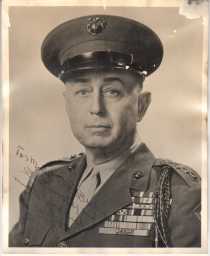
“Leadership is intangible, hard to measure, and difficult to describe. Its quality would seem to stem from many factors. But certainly they must include a measure of inherent ability to control and direct, self-confidence based on expert knowledge, initiative, loyalty, pride and sense of responsibility. Inherent ability cannot be instilled, but that which is latent or dormant can be developed. Other ingredients can be acquired. They are not easily learned. But leaders can be and are made.”
General C. B. Cates
19th Commandant of the Marine Corps

Center for Information Dominance Units Corry Station & Monterey

Commander Sung, CO, CIDU Corry
(NAVY NEWS RELEASE)  In a move to make Navy Information Dominance training more mission-effective, the Center for Information Dominance (CID) officially stood up two new commands November 14.
The request for the new commands – the Center for Information Dominance Unit (CIDU) Corry Station and CIDU Monterey – was approved by the Secretary of the Navy (SECNAV) the Honorable Ray Mabus, October 31, and announced by Chief of Naval Operations Admiral Jonathan W. Greenert the same day.
According to the message, the establishment of the new commands was in response to the “expanded size of the detachment and assigned cyber training mission.”
This action disestablishes the two largest detachments within the CID Domain: CID Detachment (DET) Corry Station and CID DET Monterey.
Annually, CID Unit Corry Station, based at Corry Station in Pensacola, Fla., is responsible for training approximately 9,000 Navy and Joint Cryptologists, Information Systems Technicians and Information Warfare and Information Professional officers; while CID Unit Monterey, based at the Presidio in Monterey, California, is responsible for the training of approximately 1,200 Cryptologic Technicians (Interpretive) and Foreign Language Officers.
CID Commanding Officer Captain Susan K. Cerovsky, compared the shore-based commands to that of a newly-commissioned ship, during her remarks at the stand up ceremony for CID Unit Corry Station.
“The plank owners here at CID Unit Corry Station and at CID Unit Monterey can be justifiably proud to be part of the fine unit that we’re about to establish,” she said. “You are definitely in capable hands and I am most humble today to be able to pin Commander Luciana Sung as one of my commanding officers within the Center for Information Dominance domain.”
In June 2011 Sung reported to Captain Cerovsky as her executive officer and officer in charge of CID DET Corry Station.
“Today is a historical day and all of us are part of it,” Sung said at the conclusion of the ceremony. “We are now a command and you should be very proud. Thank you for all of your hard work and dedication.”
In January 2010 Lieutenant Commander Thor Martinsen assumed duties as officer in charge of CID DET Monterey.
Like his instructors and their linguists-in-training, he is fluent in a second language. He has also seen several name changes at CID.
As the newly-appointed commanding officer of CID Unit Monterey, he welcomed friends and guests to the stand up ceremony at the Presidio. He also noted the command’s metamorphosis as both its name and focus have changed to adapt to its evolving mission.
“Our Navy presence at the Defense Language Institute dates back to February 1976 (not the right date, as I attended in 1975), and while our name has changed multiple times during our 35 year history, our mission of training the very best Navy linguist and fleet-ready Sailors has remained consistent throughout. I am confident that this proud legacy of excellence will continue with our new command,” Martinsen said. “It has been a privilege to serve as the CID Detachment Monterey officer in charge, and it’s a great honor to be able to continue to serve as the first commanding officer of Center for Information Dominance Unit Monterey.”
CID is the Navy’s learning center that leads, manages, and delivers Navy and joint force training in Information Operations, Information Technology, Cryptology and Intelligence.
With a staff of nearly 1,300 military, civilian and contracted staff members, CID Corry Station oversees the development and administration of more than 168 courses at four commands, two detachments and 16 learning sites throughout the United States and in Japan. CID Corry Station provides training for approximately 24,000 members of the U.S. Armed Services and allied forces each year.

Admiral John Harvey’s Ten Rules For ACTION OFFICERS (AOs)

  1. Always return emails and phone calls (ANSWER THE MAIL). If not, you become obsolete.
  2. Communicate, coordinate and collaborate with fellow Action Officers. You will be asked if your work was coordinated. There is seldom time for a “do-over.” 
  3. The coordination block of any memo should NEVER say “none.” Your job is to breakdown the bulkheads on the staff.
  4. You are expected to be the Subject Matter Expert in your area. Be brilliant on the basics.
  5. Learn how to prep emails for your boss based on his/her style.
  6. USE MICROSOFT OUTLOOK CALENDAR!! Focus on your boss’ calendar and ensure he/she is prepared in your area of expertise.
  7. Answer the question in the first sentence. Use sub bullets to support. Do NOT provide megabytes of info and expect your boss to weed through it. 
  8. If you know the question and understand the answer, you should be able to tell the story in 10 slides or less. If not, you do not understand the question or the answer. A picture is worth a thousand words if it is the right picture.
  9. Use your original thought. Be creative. Offer solutions to problems.
  10. Communicate effectively. Use plain English.