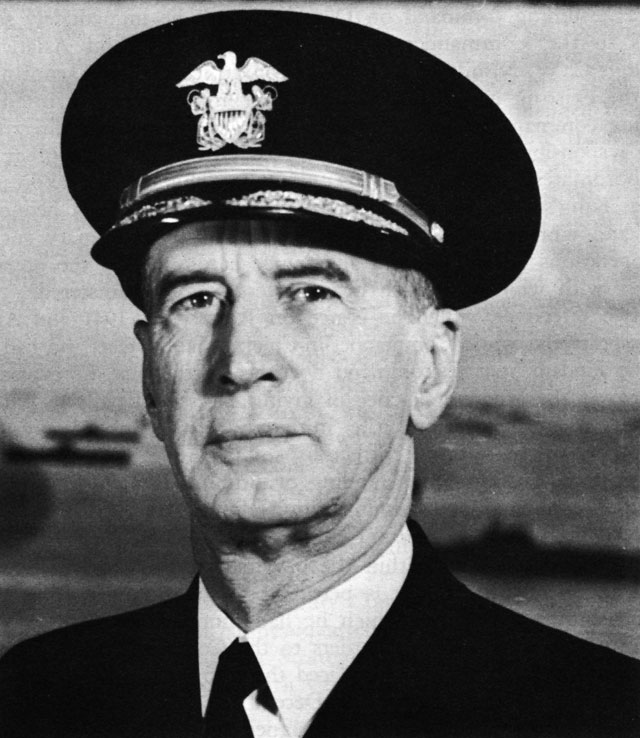
Robert William Love
Category: Uncategorized
Choosing the drum beat we march to
Lieutenant Commander K.C. Jacobsen, U.S. Navy
USNI PROCEEDING
The Stranger in the Crowd
September 1974
Change of Command at Navy Information Operations Command – Texas
On Oct. 1, 2005, the command was renamed from Naval Security Group Activity Medina to Navy Information Operations Command Texas.
RDML Leigher is now the OPNAV N2/N6F
Rear Admiral William E. Leigher
Director of Concepts, Strategies and Integration for Information Dominance, N2/N6F
Rear Admiral Bill Leigher, a native of Appleton, Maine, graduated from the University of Southern Maine in 1980 with a Bachelor in Political Science degree. He attended the Naval War College, graduating in 1994 with a Master in National Security and Strategic Studies.
In 1981, he was commissioned as an ensign at Officer Candidate School, Newport, R.I. His initial assignment was aboard USS Thorn (DD 988) as a communications officer. In 1984, he reported to the Surface Warfare Officers School in Newport, R.I., as the fleet communications instructor.
In 1987, he was selected for lateral transfer and designated a naval cryptologic officer. Later in 1987, Leigher was assigned to U.S. Naval Security Group Activity Hanza, Okinawa, Japan, as morse and non-morse division officer. In 1990, he was assigned as the staff cryptologist for commander, Cruiser-Destroyer Group 2 in Charleston, S.C. During this tour he completed two deployments embarked in USS America (CV 66), which included combat action during Operations Desert Storm, Desert Shield and Southern Watch. In 1992, Leigher was assigned to the Office of Naval Intelligence Detachment, Newport, R.I., as a war-gaming specialist.
In 1995, Leigher was assigned to COMUSNAVEUR in London, England, as the cryptologic operations officer. In 1998, he reported to commander, Naval Security Group Command, Fort Meade, Md., for assignment as deputy director for Information Technology and Communications and was subsequently assigned to the Pentagon as the executive assistant to the deputy director for Cryptology. In 2002 he reported to the National Security Agency as a senior operations officer in the National Security Operations Center. In July 2004 he reported as the deputy director for Information Operations at Naval Network Warfare Command.
He served as director, Information Operations, Washington, D.C. on the staff of the Chief of Naval Operations until December 2009. Most recently, he served as the Deputy Commander, Fleet Cyber Command/TENTH Fleet from December 2009 to June 2011. He reported to his current OPNAV assignment in July 2011.
Leigher wears the Defense Superior Service Medal, the Legion of Merit, the Meritorious Service Medal (three awards), the Navy Commendation Medal (three awards), the Navy Achievement Medal (two awards) and various unit and campaign medals.
Electronic Warfare – Well Done
The Chief of Naval Operations appreciates the contributions to winning of the war made by the officers and enlisted men, who, under hazardous conditions, manned our Combat Information Centers afloat and ashore. The tactical employment of radar and associated equipments, both offensively and defensively, gave our Fleet a telling advantage over the enemy. To those who waged our electronic warfare so loyally and effectively, “Well done”.
E.J. KING
Fleet Admiral, USN
Chief of Naval Operations
in Combat Information Center (C.I.C.) magazine
November 1945
Thankfully, the Navy does not have this problem – ‘toxic leaders’
“We are looking at the command selection process asking how can we introduce 360-degree evaluations,” General Martin Dempsey (the next Chairman of the Joint Chiefs of Staff) said in a meeting with reporters this spring. “We can ask a battalion commander, does the senior commander [over him] engender a climate of trust.” Such an approach could help weed out toxic leaders.
VADM Barry McCullough on Navy League TV
VADM James Bond Stockdale Inspirational Leadership Award Winner in 1999 – His team loves him, they really do.
Rear Admiral Bruce Estes Grooms
Assistant Deputy, Operations, Plans and Strategy (N3/N5B)
Rear Admiral Grooms, a native of Cleveland, Ohio, graduated from the U.S. Naval Academy with a Bachelor of Science degree in Aerospace Engineering.
Following completion of nuclear power training, he served in nearly every capacity aboard a variety of submarines including a tour as executive officer of USS Pasadena (SSN 752) where he twice deployed to the Persian Gulf.
His command tours include service as commanding officer of USS Asheville (SSN 758). During this tour the ship received the Battle Efficiency E award, the Golden Anchor and Silver Anchor for the highest retention in the Submarine Force. Asheville twice earned the Engineering Excellence E award, won the Fleet Recreational Award for best quality of life programs, and twice won the Submarine Squadron 3 Commodore’s Cup. Grooms subsequently served as commander, Submarine Squadron 6 and later as Commander, Submarine Group 2.
Ashore he served as a company officer and later as the commandant of midshipmen at the United States Naval Academy. He served as the senior military assistant to the under secretary of Defense for Policy. He was the senior inspector for the Nuclear Propulsion Examining Board. He served as deputy director then director, Submarine Warfare Division (N87) and as vice director, Joint Staff. Currently, he is serving on the chief of naval operations’ staff as assistant deputy, Operations, Plans and Strategy.
Grooms was selected as the Vice Admiral Stockdale Inspirational Leadership Award winner for 1999. He earned a master’s degree in National Security and Strategic Studies from the Naval War College, graduating with distinction and attended Stanford University as a National Security Affairs Fellow.
He has been awarded the Defense Superior Service Medal, the Legion of Merit and various campaign and unit awards.