Required reading by Naval Officers

Some light reading for your weekend.  This is extracted from the Standard Organization and Regulations of the U.S. Navy (SORN) OPNAVINST 3120.32 of 16 July 2012.

5.1.47 REQUIRED READING BY OFFICERS. Within a reasonable period of time after reporting for duty in a unit (as determined by the executive officer), officers shall read the following publications and report orally to the executive officer (via chain of command) that such has been completed. Further, they shall read semi-annually the publications preceded by an asterisk (*) and refer frequently to the other publications listed, plus any/all available publications relative to outstanding performance as a naval officer.
a. U.S. Navy Regulations 1990.
b. OPNAVINST 3120.32 (series), Standard Organization and Regulations of the U.S. Navy.  HERE.
*c. Department Organization and Instructions (for department to which assigned).
*d. Effective executive officer’s memoranda.
e. Officer of the Deck Order Book.
f. SECNAVINST 5510.36 (series), Department of the Navy (DON) Information Security Program Instruction. HERE.
g. SECNAV M-5510.30 (series), Department of the Navy (DON) Personnel Security Program (PSP) Instruction. HERE.
h. 10 USC Chapter 47 – Uniform Code of Military Justice.  HERE.
*i. DoD 5500.07-R, Joint Ethics Regulations.  HERE.

Stick to the basics – a reminder

FM COMNAVSURFLANT NORFOLK VA
SUBJ/COMNAVSURFLANT REGULATIONS – SERIAL 002/SHIPS ROUTINE//
GENTEXT/REMARKS/1. THE PURPOSE OF THIS MESSAGE IS TO DIRECT SPECIFIC SHIP’S ROUTINE EVENTS. THIS MESSAGE IS SERIAL 002 OF COMNAVSURFLANT REGULATIONS ANNOUNCED IN REF A.
2. BACKGROUND. A CONSISTENT AND PREDICTABLE SHIP’S ROUTINE IS ONE OF THE FOUNDATIONS OF OUR NAVY’S 236 YEAR HISTORY. SMART EXECUTION OF DAILY EVENTS IN ACCORDANCE WITH THE PLAN OF THE DAY IS A HALLMARK OF AN ORGANIZED AND EFFECTIVE SHIP AND CREW.
3. ACTION. THE FOLLOWING MANDATORY EVENTS WILL BE CONDUCTED BY ALL COMNAVSURFLANT AFLOAT COMMANDS AS PART OF THE SHIP’S DAILY ROUTINE:
A. COLORS. MORNING AND EVENING COLORS SHALL BE CONDUCTED DAILY, WHEN IN PORT, IN ACCORDANCE WITH REF B ARTICLE 1206, REF C CHAPTER 10, AND REF D. SPECIFICALLY:
(1) THE COMMAND DUTY OFFICER (CDO) SHALL TAKE STATION TOPSIDE, IN A POSITION TO VIEW AND DIRECT THE COLORS DETAIL (PREFERABLY ON THE FANTAIL OR FLIGHT DECK) DURING MORNING AND EVENING COLORS.
(2) THE OFFICER OF THE DECK (OOD) SHALL MUSTER AND INSPECT THE COLOR DETAIL PRIOR TO THE EXECUTION OF MORNING AND EVENING COLORS. DURING THE OBSERVANCE OF COLORS, THE OOD SHALL TAKE STATION FACING THE NATIONAL ENSIGN ON THE BROW OR BROW STAND.
(3) THE COLORS DETAIL SHALL BE IN THE PRESCRIBED UNIFORM AND PROPERLY TRAINED IN FLAG ETIQUETTE, AS OUTLINED IN CHAPTER 10 OF REF D.
(4) AT “FIRST CALL TO COLORS,” THE COLORS DETAIL WILL ALREADY BE AT THEIR STATION AND PREPARED TO RAISE OR LOWER THE ENSIGN ON SIGNAL.
(5) THE SIGNAL BRIDGE SHALL FOLLOW THE ACTIONS OF THE CLOSEST SENIOR OFFICER PRESENT AFLOAT (SOPA) IN VIEW.
B. QUARTERS. WHEN IN PORT CONUS, CONDUCT MORNING QUARTERS DAILY (EXCEPT ON SATURDAYS, SUNDAYS, AND HOLIDAYS). CONDUCT QUARTERS TOPSIDE, AS PRACTICABLE, GIVEN WEATHER AND PREVAILING FORCE PROTECTION CONDITION.
(1) MORNING QUARTERS SHALL BE CONDUCTED AS AN IN-PERSON, FORMAL, MILITARY EVOLUTION. UNLESS AUTHORIZED TO BE ABSENT, EACH SAILOR WILL BE PRESENT.
(2) AT MORNING QUARTERS, DIVISIONS SHALL BE FORMED UP IN RANKS AND MUSTER TAKEN. WHILE THE DIVISION OFFICER AND/OR LEADING CHIEF PETTY OFFICER IS ATTENDING KHAKI CALL, THE DIVISION SHALL BE BRIEFED ON THE PLAN OF THE DAY.
(3) THE DIVISION OFFICER WILL INSPECT HIS/HER DIVISIONAL PERSONNEL AT EACH MORNING QUARTERS.
C. DUTY SECTION TURNOVER. WHEN IN PORT, THE ON-COMING AND OFF-GOING DUTY SECTIONS WILL BE MUSTERED PRIOR TO TURNOVER. THE OFF-GOING DUTY SECTION MAY BE RELEASED ONCE THE CDO IS SATISFIED HE/SHE HAS A COMPLETE DUTY SECTION INCLUDING, AT A MINIMUM, A QUALIFIED FIRE PARTY AND REQUIRED AT/FP SECURITY FORCES.
D. MESSING AND BERTHING. THE EXECUTIVE OFFICER WILL INSPECT MESSING AND BERTHING SPACES DAILY, WHILE AT SEA AND IN PORT, PER REF E. DURING WEEKENDS AND HOLIDAYS, THE COMMAND DUTY OFFICER SHALL CONDUCT THE INSPECTION OF MESSING AND BERTHING. RECORD MATERIAL DISCREPANCIES DISCOVERED DURING THE DAILY INSPECTION IN THE CURRENT SHIP’S MAINTENANCE PROJECT (CSMP).
(1) BERTHING. VERIFY ALL PERSONNEL HAVE AN ASSIGNED/LABELED RACK, LOCKER, SERVICEABLE LINENS, AND RACK CURTAINS.
(2) HEADS. ALL COMMODES, URINALS, SINKS, SHOWERS, AND DRAINS MUST BE CLEAN AND OPERABLE. SHOWER CURTAINS, MATS, BULKHEADS, AND DECKS MUST BE CLEANED AND SANITIZED TO PREVENT MILDEW.
(3) MESSING. ENSURE THOROUGH CLEANLINESS OF GALLEY SPACES, SERVING LINES, AND TRASH PROCESSING ROOMS.
(4) A FOOD SERVICE OFFICER AND MEDICAL DEPARTMENT REPRESENTATIVE SHALL INSPECT THE CULINARY SPECIALISTS AND FOOD SERVICE ATTENDANTS DAILY TO ENSURE COMPLIANCE WITH SANITARY REQUIREMENTS.
E. SWEEPERS. CONDUCT SWEEPERS AT LEAST ONCE EACH DAY, IN PORT OR AT SEA.
F. 8 O’CLOCK REPORTS.
(1) THE EXECUTIVE OFFICER, OR CDO WHEN IN PORT, WILL CONDUCT 8 O’CLOCK REPORTS DAILY.
(2) THE CDO, AFTER COMPLETING HIS/HER REVIEW, WILL DELIVER THE 8 O’CLOCK REPORTS TO THE EXECUTIVE OFFICER FOR REVIEW ON THE FOLLOWING WORK DAY.
(3) THE EXECUTIVE OFFICER WILL FORWARD ALL 8 O’CLOCK REPORTS TO THE COMMANDING OFFICER.
4. RADM THOMAS SENDS.//

2012 RADM James S. McFarland NJROTC Scholarship Award Winners

Three Bloomfield Indiana High School Naval Junior ROTC cadets earned $2000.00 in Rear Admiral James S. McFarland NJROTC scholarships in 2012.  Christian Chumley, Zachariah Query and Eric Stewart were selected by a group of active duty and retired cryptologists for this scholarship based on their handwritten essays about their experiences as NJROTC cadets.  LCDR Frank Starr (a retired 1610) is the Senior Naval Science Instructor at Bloomfield High School.  His cadets in Kentucky, Alabama and Indiana have been the recipients of the RADM McFarland NJROTC Scholarships since 2005.  Normally, $1000.00 is awarded each year.  In 2012, RADM Andy M. Singer generously contributed an unsolicited additional $1000.00 for this scholarship award. 

From my Father’s side of the military

Chief Master Sergeant of the Air Force James Roy says that digital technology threatens to cripple the Air Force.  “As electronic communication becomes more widely used, our face-to-face interaction skills are beginning to suffer,” he says.  Leaders have learned how to text, Skype, and FaceTime, but now some of them seem reluctant to engage in a meaningful face-to-face conversation.
He urges his fellow airmen to engage more in what he calls analog leadership:

Analog leadership means temporarily putting down the iPads and Android tablets, logging out of Facebook and Twitter, and switching phones to airplane mode to stop the stream of texts coming in and out. It means shutting off the technology and talking to each other.

Face-to-face. One-on-one.

Real human interaction – yes, for some of us it may be awkward at first, but getting to know each other better is an investment that will yield incalculable returns. Stronger connections will create a foundation on which we can grow more meaningful relationships.

Not an endorsement – Heather Beaven, former CT is running for Congress

PALM COAST, FL – Heather Beaven, Navy veteran and CEO of The Florida Endowment Foundation for Florida’s Graduates, announced her intention to run for Congress in Florida’s new 6th Congressional District. 
This is not an endorsement, but it’s great to see former cryptologists continuing to serve their country.  I’d love to hear the back story on how President Clinton selected her to serve aboard USS KINKAID.  From her website:

“During her naval service, Beaven was a cryptologist who was awarded a Navy Achievement Medal and selected by President Bill Clinton to serve on the USS Kinkaid, a Spruance-class destroyer, making her one of the first 10 female Sailors to sail on a combat-ready vessel.”  You can read more about her HERE

Sailors remember

It takes 15 years to gain 15 years of experience.  Despite what you might think, there are not too many short cuts and sometimes we have to go the long way.  Sailors take time to develop into solid leaders.  It’s nice to follow them through the years and watch them grow.  Some of our best Second Class Petty Officers from 1997-2000 are strong Master Chiefs today.  Some others are Lieutenants.  One of our First Class Petty Officers from that time is now a Lieutenant Commander selectee – Congratulations Scott Blue.  I salute my crew from U.S. Naval Security Group Activity Yokosuka, Japan.  You’ve done well.  You’ve made your Shipmates Proud.  Congratulations also to Ensign Nico Figueroa who gets promoted to LTJG on 31 July.  And special thanks to Master Chief Cedric Rawlinson who returned to Yoko as the Command Master Chief and Lieutenant Commander Andy Reeves who is the OPS officer and will fleet up to XO.  If we can get Commander Mike Elliot in there as Commanding Officer next year, we’ll have come full circle.  You Sailors are truly awesome !!

Innovation for young Navy leaders

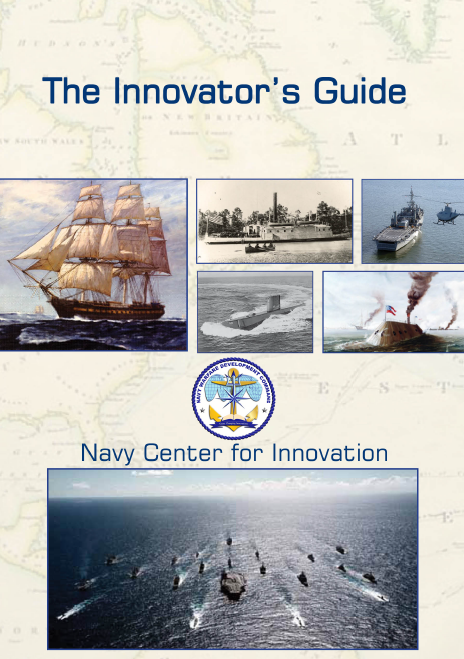
To apply the American spirit of ingenuity that is ingrained in all of us to this task, you must have a solid understanding of what innovation is and why it is essential to the Navy. It is also important that you become familiar with proven techniques that will help you to become a more innovative thinker.

This guide is intended to help innovators of all ages—especially junior leaders—to develop creative solutions and push them forward to become new warfighting capabilities. You own the future. As such, you have a professional obligation and vested personal interest in shaping the capabilities and the culture of tomorrow’s Fleet. To do this you must:

  • Think deeply
  • Question continuously
  • Debate rigorously
  • Read broadly
  • Write boldly
  • Never give up on a good idea

I ask for your full commitment in this important endeavor. We must work together to reinvigorate a spirit of creativity across the Fleet that produces advantages for future warfighters.

T. B. Kraft
Rear Admiral, United States Navy
Navy Warfare Development Command

The Innovator’s Guide is HERE.

Leader versus leadership position

The single factor that distinguishes one superior command from another is the Commanding Officer

• Leaders are made
     o Must have intelligence
     o Must have energy
     o Must have character
            – A moral outlook
            – A sense of integrity

Leadership is the governing factor in the U.S. Navy promotion system.  The most impressive single factor in defining success is the ability to get things done.  The primary responsibility of a naval officer in very grade is to help move the leadership bell curve to the right, to improve leadership at every echelon.

Walk among your Sailors


Whenever you become fed up with endless meetings, exhausting protocol and mountains of paperwork, you can refresh yourself by a simple visit with your Sailors.  By walking among them, talking with them as individuals, listening to each others’ stories, you will be refreshed and reassured that these men and women are among our Nation’s finest and that our Navy is indeed in good hands.

Now, grab that folder of PowerPoint briefs and get to that meeting on time so you don’t violate protocol.

More from the awesome Scott Adams HERE.