Sad passing of a Shipmate

LANCASTER, Pa. – David Chaloner Gill, 75, of Lancaster, Pa., died Saturday, June 9, 2012 at Arbor View at Willow Valley.

Born in Concord, he was the son of the late Dr. MacLean John and Marie Florence Chaloner Gill. He was the husband of Judith “Julie” Strong Gill and they celebrated 52 years of marriage on May 28th.

He prepared for college at Proctor Academy in Andover, and received his Bachelor’s degree from Bowdoin College in Brunswick, Mass. in 1959. In 1960, he entered the United States Navy and was commissioned an Ensign in the United States Naval Reserve at Newport, R.I.

David retired from the Navy on July 1, 1991 after a career of 31 years as a cryptologic specialist. During his tenure in the Navy, duty stations included Italy, Japan and Hawaii.

He held a Master’s degree in computer systems management from United States Naval Post Graduate School in Monterey, Calif.

Captain Gill’s personal decorations include the Defense Meritorious Service Medal, the Meritorious Service Medal, the Navy Commendation Medal, the Armed Forces Expeditionary Medal and the Defense Superior Service Medal.

More recently, he worked as a Senior Staff Member for TechSoft, Technical Software Services, Inc. in Pensacola, Fla., retiring in 2005.

In addition to his wife, he is survived by a daughter, Monica Nutting Gill Smith and her husband Greg of Hambrucken, Germany; a son, Benjamin M. Chaloner-Gill and his wife Sandra of Alameda, Calif.; a granddaughter, Melia Kirsten Nutting Smith of Karlsruhe, Germany and a sister, Cynthia Gill Panshin of Corvallis, Ore.

Relatives and friends are respectfully invited to attend a memorial service in the Orr Auditorium of Willow Valley Manor, 211 Willow Valley Square, Lancaster, Pa. on Saturday, June 23, at 11 a.m. with Rev. Glenn Creveling officiating. The family will greet friends at Willow Valley Manor from 10 a.m. until the time of service.

Interment at Indiantown Gap National Cemetery, Annville, Pa. will be private and at the convenience of the family.

If desired, contributions in David’s memory may be sent to National Parks Conservation Assoc., 777 Sixth St., N.W., Suite 700, Washington, D.C. 20001

A young man’s view on anonymous writing

We always seem to start discussions of professional writing and innovation with a discussion of career risk. As a writer working in both web and print, I want to throw out the disclaimer that the decision to speak, write, or blog publicly or anonymously is deeply personal and depends on circumstance. I don’t begrudge anyone who writes under a pseudonym, which has a venerable lineage extending far before “Publius” and The Federalist Papers. That being said, I think that writing publicly carries some advantages:
  • Attaching one’s name and reputation to a piece of writing creates a drive for excellence difficult to replicate when writing anonymously. None of us wants to be criticized, so public writers have more incentive to hone their arguments; ultimately, the better arguments will stand the best chance of adoption and implementation.
  • Writing anonymously allows people to speak truth to power, but it also diminishes responsibility. As a result, anonymous writings can often devolve into mere complaint and invective. Public writing, while less able to challenge authority, also produces more measured, balanced prose and often proposes solutions instead of merely lamenting a problem.
  • Being creatures of ego, we want credit for a winning concept. Public writing best enables that credit to be given fairly in the marketplace of ideas.

From: “Gladiator vs. Ninja, or, The Innovation Discourse”
Center for International Maritime Security, June 7
LT Kurt Albaugh
Instructor in the Naval Academy’s English Department.

Really care about becoming a better leader??

Then, you MUST read this book by Captain L. David Marquet (USN-retired). It will be available soon. You can pre-order it now from a variety of sources. Amazon has it HERE. You can follow the Captain on twitter @totheleadernyou

Captain Marquet is a graduate of U.S. Naval Academy. led a distinguished career in the U.S. submarine force. He commanded USS Santa Fe (SSN 763), stationed in Pearl Harbor, Hawaii. Captain Marquet completely turned around Santa Fe, where the crew went from being “worst to first.” Santa Fe earned numerous awards for being the most improved ship in the Pacific and the most combat-effective ship in the squadron. Santa Fe continued to win awards after his departure and promoted a disproportionate number of officers (including 9 officers commanding or heading to command submarines) and enlisted men to positions of increased responsibility. After riding USS Santa Fe, noted author Stephen R. Covey said it was the most empowering organization he’d ever seen and wrote about Captain Marquet’s leadership practices in his book, The 8th Habit.

His bold and highly effective leadership can be summarized as “give control, create leaders.” He is a life member of the Council on Foreign Relations and lives in Florida with his wife, Jane.

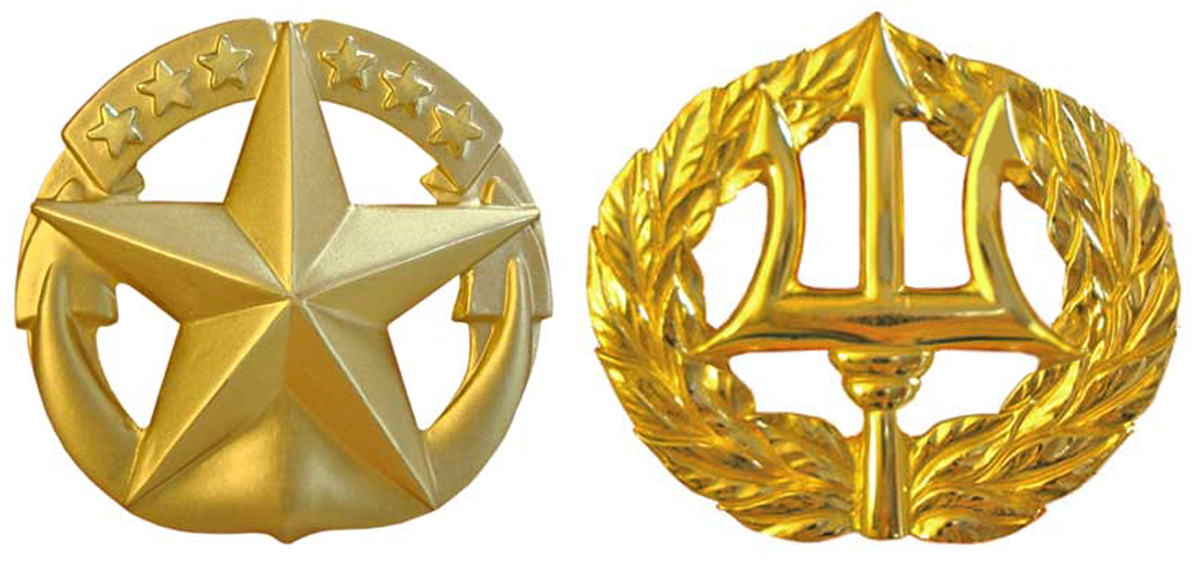
Last surviving member of Admiral Nimitz’s intelligence team is awarded his Information Dominance Warfare Officer qualification

CAPT Ashworth presents RADM Showers with his certificate .
A year ago, Captain Steve Ashworth ‘took permission’  and awarded Rear Admiral “Mac” Showers his Information Dominance Warfare insignia and certificate for his many achievements over a long Navy career.
Less than a year prior to the Battle of Midway, retired Rear Admiral Donald “Mac” Showers had been commissioned on Sept. 12, 1941 as an Ensign. Soon after his commissioning, he received orders to join Pearl Harbor’s code breakers. One of very few code breakers, “Mac” was assigned to Station Hypo. Commander Joseph John Rochefort was the Station Hypo officer in charge. Rochefort hand-picked many of Hypo’s augmentees, and it contained the Navy’s best cryptologists, cryptanalysts, traffic analysts, and linguists. By the spring of 1942, Rochefort’s staff, which included Showers, was making positive strides toward deciphering the Japanese Navy’s crucial next move. 

About that time, Japanese intercepts began to make references to a pending operation in which the objective was designated as “AF”, but not everyone was convinced. Showers was a key witness to the history, in fact the conversation regarding the significance of “AF” between Rochefort and Cmdr. Jasper Holmes took place at his desk. Both Rochefort and Holmes knew they needed to convince Admiral Chester Nimitz and Washington that the Japanese may be targeting Midway Island. Both believed that “AF” signified Midway Island based upon his staff’s earlier deductions that the “A” designators were assigned to locations in the Hawaiian Islands. 

Rochefort’s staff assisted in drafting a naval message, in the clear, indicating that Midway Island’s water distillation plant had suffered serious damage and that fresh water was needed. Shortly after the transmission, an intercepted Japanese intelligence report indicated that “AF” was short of water – which satisfactorily alleviated any doubt. 

Due to the cryptologic and intelligence achievements of Rochefort and his staff, including Showers, the team enabled Nimitz to know when the attack on Midway Island would commence. Armed with this crucial information, he was able to get his severely outgunned, but determined force in position in time.

This news thrills me to no end…

NAVY STANDARDIZES COMMAND QUALIFICATIONS

WASHINGTON (NNS) — Chief of Naval Operations, Adm. Jonathan Greenert, approved an instruction governing the Navy’s Command Qualification Program June 4, setting the standards for qualifying and screening Navy commanding officers. OPNAV Instruction 1412.14 guides officer communities on how to formally establish a written command qualification program and how to formally screen prospective officers for command.

Prior to the release of this instruction, command qualifications were left to the individual officer communities. Following an internal review of the different programs, leadership determined common threads needed for effective command which could be highlighted during a standardized screening and qualification process. “This program will strengthen the caliber of our leaders and provide for a more ready, capable fleet by ensuring we select the right people for command by adhering to clear, consistent professional qualification standards. This process recognizes each community’s unique professional standards, while reinforcing the necessarily high expectations we hold for those in command Navy-wide,” explained Adm. John Harvey, commander, U.S. Fleet Forces.

While the instruction primarily provides guidance to community leaders and mandates standards, it also contains some requirements and expectations for prospective commanders. During Command Leadership School (CLS), which is now mandatory, candidates will complete a written examination that covers specific professional knowledge requirements and participate in a 360° assessment of their strengths and weaknesses with the help of certified counselors. Capt. Michael Slotsky, commanding officer of CLS, explained how the students will be impacted by this training. “Prospective commanding officers will now demonstrate and reflect in writing how they will apply tenets of good leadership, bedrock principles of authority-responsibility-accountability and Navy Regulations as they prepare for command. Individual student’s self-awareness and leader development will also be enhanced through the 360 assessment and coaching they will receive,” said Slotsky.

The new instruction also tasks affected officer communities to develop and prescribe a set of professional qualification and oral board standards that reflect the needs of their communities. Once an officer from their community has achieved the knowledge standards required, demonstrates mastery of the required skills, and sits an oral board with officers in command, community leaders will ensure their candidates receive a formal review by an administrative board.

The full instruction is HERE.

USS Liberty

On June 8, 1967, USS LIBERTY (AGTR-5) was attacked by Israeli jet fighters and torpedo boats.

The attack killed 34 Sailors, and wounded 174 more on board. Both U.S. and Israeli governments conducted inquiries about the incident, and decided the attack was a result of Israeli confusion about what the USS LIBERTY was.

However, Admiral Kidd believed with certainty that this attack, which killed 34 American Sailors and injured 174 others, was a deliberate effort to sink an American ship and murder its entire crew. Admiral Kidd repeatedly referred to the Israeli forces responsible for the attack as “murderous bastards.” Admiral Kidd believed based on the documentary evidence and testimony received first hand, that the Israeli attack was planned and deliberate, and could not possibly have been an accident.

Success formula

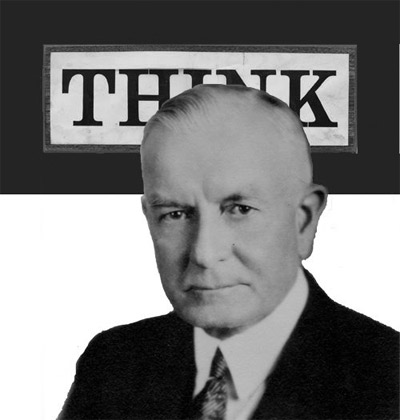
“Would you like me to give you a formula for success? It’s quite simple, really. Double your rate of failure. You are thinking of failure as the enemy of success. But it isn’t at all. You can be discouraged by failure or you can learn from it. So go ahead and make mistakes. Make all you can. Because remember that’s where you will find success.”

Thomas J. Watson

Delight your Sailors

Do you delight your Sailors with your leadership?  Shouldn’t you?  Let me tell you, some of our Navy leaders ARE delighting their Sailors with their leadership and there is no reason you can’t do the same for your Sailors.  They deserve it, don’t they?   Hell yes, they do !!
We have some great Navy leaders out there who are doing a phenomenal job of fulfilling their command’s mission, having fun doing it, setting new standards of excellence and providing superb leadership for their Sailors.  They are leading the way and their Sailors are anxious to follow them.

If I didn’t describe your work as a Navy leader in the preceding paragraph, it’s not too late.  You can do it.  Go ahead – delight your Sailors with your leadership.  Give them your best – they deserve it.

Growing our Sailors

Just as we cannot see that a seed has taken root until it breaks through the surface of the soil, we cannot always see our Sailors’ growth happening until it does the same.  Give your Sailors a chance to grow.  And never forget that their excellence may be just below the surface, ready to break through and shine at any moment.