
If you would not be forgotten as soon as you are dead, either write things worth reading or do things worth the writing.
BENJAMIN FRANKLIN
also
Admiral James Stavridis
Musings, leadership tidbits and quotes posted by a retired Navy Captain (really just a high performing 2nd Class Petty Officer) who hung up his uniform a bit too early. He still wears his Navy service on his sleeve. He needs to get over that. "ADVANCE WARNING – NO ORIGINAL THOUGHT!" A "self-appointed" lead EVANGELIST for the "cryptologic community". Keeping CRYPTOLOGY alive-one day and Sailor at a time. 2019 is 84th Anniversary of the Naval Security Group.
If you would not be forgotten as soon as you are dead, either write things worth reading or do things worth the writing.
BENJAMIN FRANKLIN
also
Admiral James Stavridis
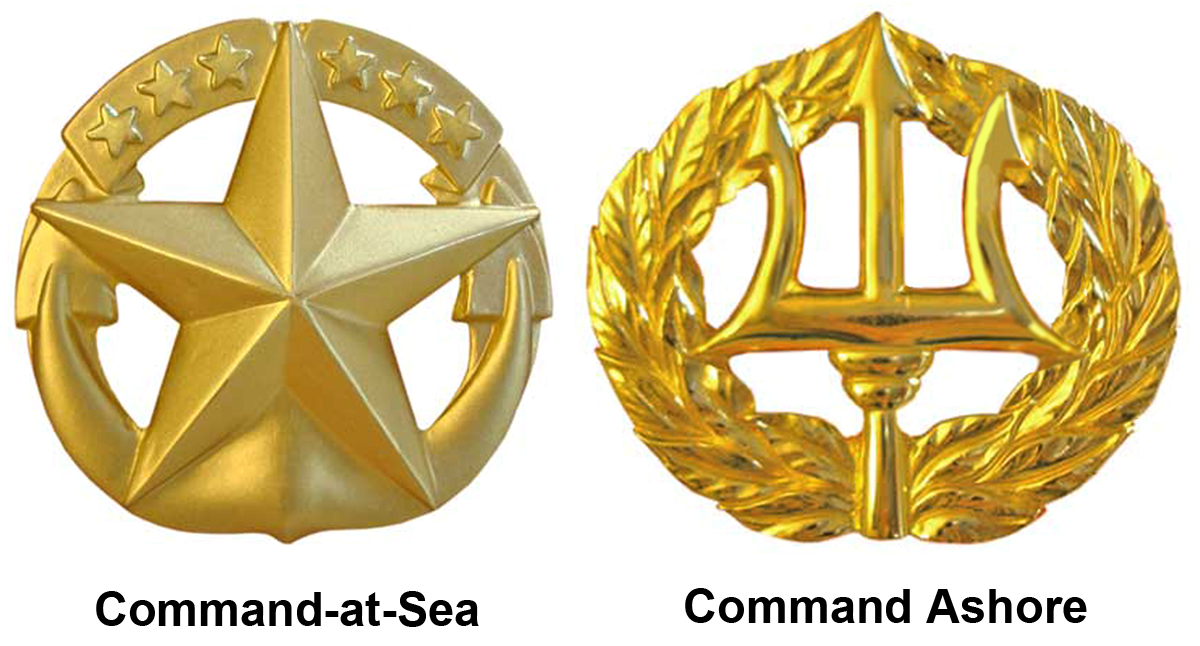
The Commander’s responsibility for his command is absolute and he must and will be held accountable for its safety, well-being and efficiency. That is the very foundation of our maritime heritage, the cornerstone of naval efficiency and effectiveness and the key to victory in combat.
This is the essence of the special trust and confidence placed in an officer’s patriotism, valor, fidelity and abilities.
Every day in command tests the strength of character, judgment and professional abilities of those in command. In some cases, Commanders will be called upon to answer for their conduct in a court of law. In all cases, they will be professionally judged by seagoing officers — a far more stringent accountability in the eyes of those who follow the sea.
We in the Navy would have it no other way, for the richest reward of command is the personal satisfaction of having measured up to this responsibility and accountability.
In no particular order.

1. He has the promotion list with your name on it and he makes you wait outside his office for 40 minutes stewing over it before sharing the good news with you.
2. She doesn’t answer your letters or e-mails.
3. He won’t endorse any of your requests to higher authority.
4. She insults you in front of family and friends at every opportunity.
5. He takes all the credit for good deeds and blames failures on you.
6. She never repays her $$$ debt to you.
7. He’s happy to have you do all of his ‘dirty’ work and does all the fun stuff himself.
8. She NEVER respects your time or that of your subordinates.
9. He never accepts any of your suggestions or recommendations.
10. She tells you, “You know, I just don’t like you.”
AND, here is something from Alison Green at US NEWS and WORLD REPORT on 10 signs that your boss just isn’t that into you:
1. You ask for more feedback and don’t get it.
2. He doesn’t introduce you to important contacts.
3. She turns your raise request down without much explanation.
4. He doesn’t trust you to get your work done.
5. You imply you’re looking at other jobs and she doesn’t seem to care.
6. You hear little positive feedback.
7. She never asks for your advice.
8. You have trouble getting his attention.
9. She shows no interest in trying to solve your problems.
10. He tells you (he’s not that into you). See my #10 above.

1. VADM Michael S. Rogers – 1810
Commander, U.S. Fleet Cyber Command/TENTH Fleet
2. RADM William Leigher – 1810
Director of Warfare Integration for Information Dominance (OPNAV N2/N6F)
3. RDML Sean Filipowski – 1810
Deputy Director of Operations, U.S. Cyber Command
4. RDML Jan E. Tighe – 1810
Director, Decision Superiority, OPNAV N2N6F4
5. RDML Willie Metts – 1810
Deputy Chief of Tailored Access Operations, National Security Agency
6. Mr. Mark Neighbors – Former 1610
Special Assistant to Vice Admiral Kenneth Card
7. Mr. Jerome Rapin – Former 1610
Director – Cyber, Sensors and Electronic Warfare – OPNAV N2N6F3
Rear Admiral Michael A. Brown will have a retirement ceremony at the United States Naval Academy on 13 January 2012. We thank him for his selfless service to the Navy and the Nation and for his leadership in the cryptologic community.

“Hereafter, if you should observe an occasion to give your officers and friends a little more praise than is their due, and confess more fault than you can justly be charged with, you will only become the sooner for it, a great captain. Criticizing and censuring almost everyone you have to do with will diminish friends, increase enemies, and thereby hurt your affairs.”
Benjamin Franklin in a note to Captain John Paul Jones

Sharing what one knows is intuitive. This is particularly true within the Navy and Marine Corps where teamwork is held in the highest regard. Excellent examples of intuitive knowledge sharing are Navy Chief Petty Officer messes and Company Non-Commissioned Officer discussions within the Marine Corps.
However, the consistent application of knowledge management concepts, techniques, tools, and technologies will improve knowledge identification, sharing, and re-use. In turn, this will help optimize decision-making, improve efficiency and effectiveness of task accomplishment, and empower the Naval warfighter.
Knowledge management fosters collaboration across organizational boundaries, time and space, and links people who have the requisite tacit and explicit knowledge with those who need it to do their job.
“By ignorance the truth is known.”
Henry Suso

CDR Pethel has received the Defense Meritorious Service Medal, the Meritorious Service Medal (2), the Navy Commendation Medal (3), Navy Achievement Medal (3) and various unit awards and decorations.
 I Like The Cut of His Jib